
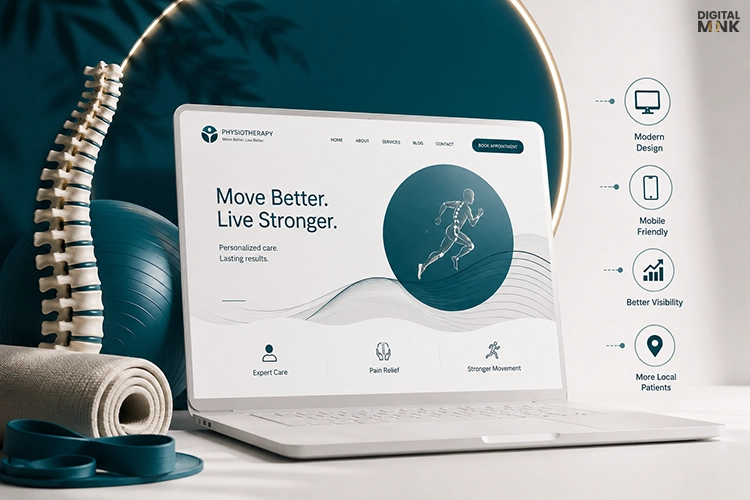
A patient’s first interaction with your clinic probably won’t happen at the front desk.
It’ll happen on a screen.
Maybe it’s during a lunch break. Maybe while sitting in the car after work. Maybe after another night of restless sleep because the back pain hasn’t eased up. Before they call your clinic or book an appointment, they’re almost certainly going to visit your website.
That’s where physiotherapy website design starts influencing decisions in ways many clinics don’t realize.
Patients aren’t on your website to admire the animations or the layout. Also, today, they expect more than just information.
Can this clinic help me? Does it feel professional? Can I book without jumping through hoops?
Basically, they expect a website to book appointments, making it easy to schedule a visit the moment they decide to seek treatment.
Those questions are often answered long before anyone reads a full paragraph.
A website that feels clear, modern, and easy to use quietly builds confidence. One that feels outdated or difficult to navigate can do exactly the opposite.
And those first impressions are surprisingly hard to undo.
Why Physiotherapy Website Design Starts Before Patients Read a Single Word
Long before someone explores your treatment pages or reads about your team’s experience, they’re already forming an opinion.
It happens almost instinctively.
A cluttered homepage can feel overwhelming. Tiny text makes reading difficult. Poor-quality photos or an outdated design can leave patients wondering whether the same lack of attention carries over into the clinic itself.
Fair or not, that’s how people judge businesses online.
Good physiotherapy website design isn’t about making a website look expensive. It’s about making patients feel comfortable enough to keep exploring. Keep in mind that patients notice the little things. Whether the website is easy to navigate, quick to load, and simple enough to book through immediately.
Think of your website as the digital equivalent of your reception area.
Before anyone meets your physiotherapists, experiences your care, or begins treatment, they’re deciding whether your clinic feels like somewhere they’d trust with their recovery.
And that decision often happens within moments of the page loading.
Patients Don’t Compare Every Clinic. They Eliminate Them.
It’s easy to imagine patients sitting down with a shortlist of ten physiotherapy clinics, carefully weighing the pros and cons of each.
In reality, that’s rarely what happens.
Most websites are either moving patients closer to booking or quietly giving them a reason to leave.
A confusing menu. Broken links. A homepage that feels cluttered. Treatment information that’s difficult to find. Pages that haven’t been updated in years. None of these issues seems dramatic on its own, but together they create uncertainty.
And uncertainty rarely leads to appointments.
People don’t always know why they leave a website.
They simply move on to the next clinic that feels easier to understand.
That’s why the best clinic doesn’t always earn the booking. Quite often, it’s the clinic that removes the fewest obstacles.
Your website shouldn’t make patients work for answers.
It should answer their questions before they even think to ask them. That also means providing a clear website for appointment booking, so patients don’t have to search for phone numbers or wait to schedule a visit.
Good Physiotherapy Website Design Makes Booking Feel Effortless
By the time someone decides to contact your clinic, the hardest part should already be over.
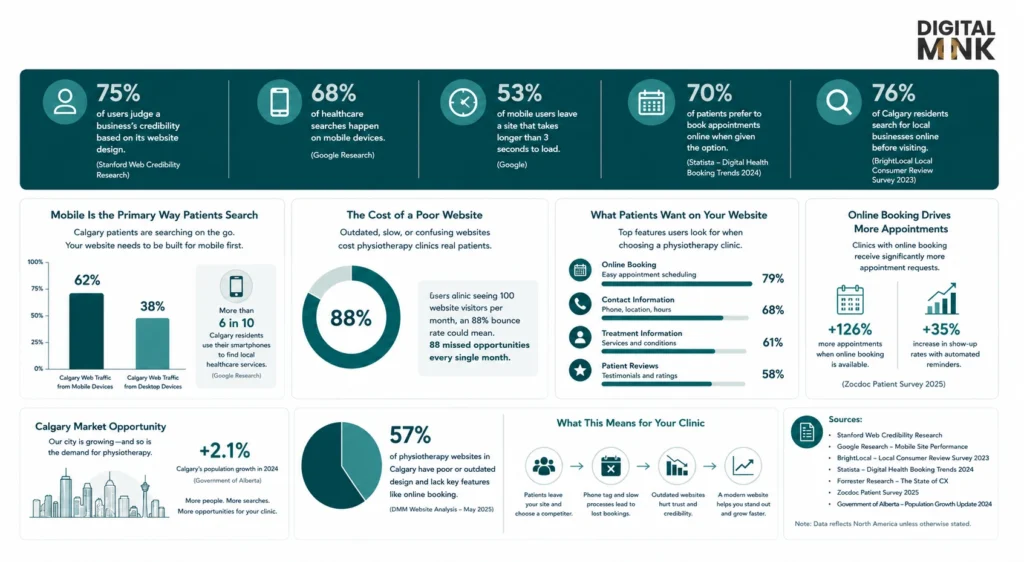
Booking the appointment shouldn’t become another hurdle.Whether a patient is visiting your physiotherapy clinic website from a desktop at work or scrolling on their phone between errands, the experience should feel simple from beginning to end.
| Industry Insight According to Google, mobile users are far more likely to abandon websites that are difficult to navigate. For healthcare providers, that often means a patient choosing another clinic before making first contact. |
A responsive healthcare website with clear contact details and patient appointment scheduling software can make the difference between “I’ll do it later” and “Appointment booked.”
Whether you use Jane App or another appointment scheduling software for your website, the goal is the same: remove friction and let patients book while they’re ready.
That’s where good physiotherapy website design quietly earns its value. It removes friction from one of the most important moments in the patient journey.
As Steve Jobs once said,
“Design is not just what it looks like and feels like. Design is how it works.”
Similarly, the strongest healthcare websites with appointment scheduling leave patients with very little to think about except choosing a convenient time.
| Your website should make booking an appointment feel as easy as deciding to seek treatment. Explore Our Website Development Services |
Most Patients Will Visit Your Website on Their Phone
Think about when someone is most likely to search for a physiotherapist.
It probably isn’t while they’re sitting comfortably at a desk.
More often, it’s during a lunch break, while waiting to pick up the kids from school, or after another long drive home on Deerfoot Trail when the back pain hasn’t eased up. In those moments, they’re using a phone, not a laptop.
That’s why every mobile healthcare website should be built with convenience in mind. Fast loading pages, thumb-friendly navigation, readable text, and click-to-call buttons make it easier for patients to act while they’re ready.
A well-designed website calendar booking system removes unnecessary friction, making it easier for patients to schedule appointments without unnecessary back-and-forth.
A responsive website design is all about making normal tasks feel straightforward, not complicated. Patients shouldn’t have to zoom in, search for buttons, or struggle to book an appointment from their phone.
From an online booking calendar for your website to click-to-call buttons, every feature should be easy to use on any screen size.
A great website doesn’t stop working once it’s published.
In many ways, that’s when the real work begins.
Physiotherapy Website Design Should Keep Improving After Launch
Your clinic grows over time, and so should your website.
Gradually, even a high-performing website may lose relevance when it isn’t maintained.
Newly launched service, practitioner profiles updates, or new patient stories: they all must be shared. When patients see the latest information on your website, they are likely to feel confident that they’re looking at an accurate picture of your clinic.
Regular physiotherapy web development helps your website stay current, making it a more reliable resource for both new and returning patients.
Whether you’re refreshing an existing website or planning a new Calgary web development project, consistent improvements almost always outperform occasional redesigns.
| See how thoughtful website development improved the patient experience, increased engagement, and supported long-term clinic growth. View Our Case Study |
Your Website Is Often Your First Consultation
Patients don’t expect your website to be flashy.
They expect it to answer a simple question:
“Can I trust this clinic?”
That answer isn’t found in one headline or one photograph. It’s built through dozens of small details, from a fast-loading page and clear treatment information to an easy booking experience and a website that works just as well on a phone as it does on a desktop.
Good physiotherapy website design isn’t about impressing visitors. It’s about creating an appointment booking website that gives patients enough confidence to stop searching and take the next step toward recovery.
| Ready to create a website that turns first impressions into first appointments? Contact Our Team |