
Not long ago, having a decent dental website was enough.
A few service pages. A phone number. Maybe a contact form that emailed the front desk.
For years, that worked.
Patients searched for a clinic, found a website, made a phone call, and booked an appointment.
The problem is that people don’t interact with businesses the same way they did ten years ago.
Think about the last time you booked a hotel room, ordered takeout, reserved a table at a restaurant, or even scheduled a haircut. Most of those tasks probably happened without speaking to another person.
Then, suddenly, a dental website asks you to call during business hours.
That small gap between expectation and reality is becoming surprisingly important.
Over the past few years, we’ve worked with several dental practices that had strong reputations, experienced clinicians, and plenty of website traffic. Yet some were still struggling to convert visitors into appointment requests.
The issue wasn’t always visibility, pricing, and certainly wasn’t the quality of care.
More often than not, the website simply created more work than patients expected.
A Dental Website Competes With More Than Other Dental Websites
One mistake businesses sometimes make is assuming they’re only competing against other clinics.
Patients don’t think that way.
Someone searching for a dentist in Calgary isn’t comparing your booking experience with another dentist’s booking experience. They’re comparing it with every digital interaction they’ve had recently.
They’ve used banking apps that take seconds to log into. They’ve ordered groceries from their phone while sitting in a hockey arena parking lot. They’ve booked flights, checked package deliveries, and scheduled home services without making a single phone call.
Those experiences quietly shape expectations.
By the time someone lands on a dental website, they already have a mental picture of what “convenient” feels like.
If the process feels harder than expected, friction appears.
And friction has a habit of costing appointments.
The Appointment Was Probably Lost Before The Phone Ever Rang
A clinic doesn’t always lose patients because another practice has better reviews.
Sometimes the difference is much simpler, yet trickier to spot.
Imagine someone notices a cracked filling on a Wednesday evening. They pull out their phone around 9:30 PM and start researching local dentists.
One clinic asks them to call tomorrow morning. Another offers a simple website to book appointments online.
Mind you, neither clinic has spoken to the patient or discussed treatment so far. Yet one practice has already made it easier to move forward.
That convenience often matters more than clinic owners realize.
| Industry insight: Patients don’t think, “Let’s pick this clinic because their booking system is excellent. “What they often feel instead is, “It was easy. “In many cases, that’s exactly the same thing. |
Why Online Booking Is Becoming Less Of A Feature And More Of An Expectation
A few years ago, offering online scheduling felt innovative. In 2026, it’s not only starting to feel normal, but also has become almost essential.
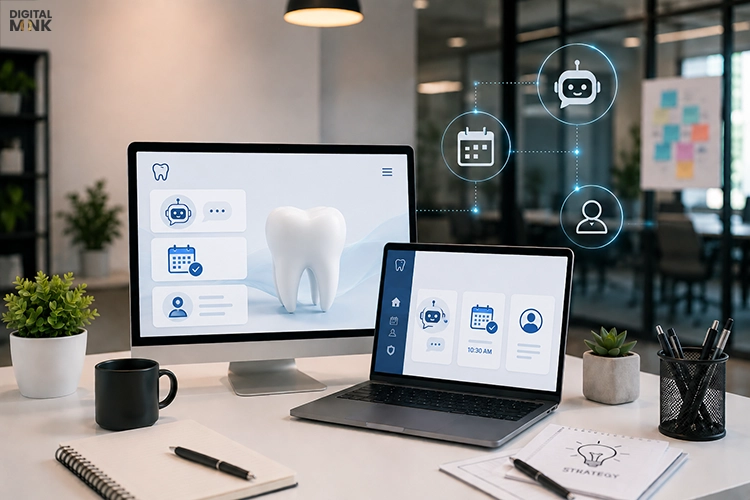
Many practices are implementing a website calendar booking system that allows patients to see available times and secure appointments whenever it’s convenient. Some are also using patient appointment scheduling software to reduce administrative workload while giving patients more flexibility.
The technology itself isn’t particularly interesting. But the experience is.
People like solving problems when they’re thinking about them, not twelve hours later when the office opens.
That’s one reason modern dental website development is moving away from brochures and closer to functionality.
Patients increasingly expect websites to help them take action, instead of just providing general information.
| From Theory To Practice It’s one thing to talk about changing patient expectations. It’s another to see what happens when a dental website is designed around them. We documented the strategy, improvements, and outcomes in a recent dental client case study. See The Results |
AI Chatbots Are Filling An Unexpected Gap
Whenever AI comes up, the conversation usually jumps straight to technology.
Interestingly, most patients don’t even care about the technology. They just want to get answers, as fast as possible.
A visitor browsing your website at 8:45 PM might have a simple question:
Do you offer emergency appointments?
Do you accept a particular insurance plan?
Is Invisalign available?
A few years ago, those questions would have waited until the next morning. But in 2026? Waiting can cost you the patient entirely.
Today, clinics are using AI chat assistants to handle common inquiries and guide visitors toward the right information. No human interference is needed.
The interesting thing, however, is that even the best chatbot disappears into the experience. Patients don’t sit and think, “Wow, what a great chatbot.”
All they think is, “That was quick and helpful.” And that’s the outcome that matters.
| A modern website should do more than showcase your practice. It should help patients take action. Explore Our Website Development Services |
Patient Portals Are Quietly Solving Another Problem
You might think the patient journey begins only when someone walks through the clinic door. That’s not the whole story.
In reality, it often begins much earlier.
Paperwork, intake forms, insurance details, consent forms. None of these tasks are particularly complicated, but they can create unnecessary friction when everything happens at the reception desk.
Patient portals usually help move some of that work online, which obviously saves time and effort. Patients can complete forms in advance, upload documents securely, and review important information before their visit.
The result isn’t dramatically different. However, everything feels smoother.
And smooth experiences tend to leave stronger impressions than complicated ones.
Security, Compliance, And Trust Still Matter
Convenience is important, but healthcare operates under a different set of expectations than most industries.
Patients are sharing personal information. Sometimes sensitive information, such as medical records, past medical history, insurance details, and so on.
That responsibility cannot be treated lightly.
Any platform that collects health information about people has to follow the rules about keeping that information private. This means they have to do what laws like HIPAA in the United States say or what PIPEDA in Canada says or they have to follow rules about keeping health information private in their area.
This is one reason many practices rely on platforms such as Open Dental, Dentrix, or Eaglesoft as part of their scheduling and patient management workflows.
Behind every seamless digital experience should be a strong foundation of privacy, security, and compliance.
Patients may never notice or mention it when it’s done well. But they’ll certainly notice when it isn’t.
The Best Dental Website Are Starting To Feel Invisible
This might sound a bit strange, but the best dental website design often draws very little attention to itself.
Visitors aren’t turning up to admire animations, evaluating fonts, or observing images.
They’re trying to get their questions answered in the simplest manner.
Can this clinic help me with my dental issue? Can I trust them with my data and money? Or Can I book an appointment without jumping through hoops?
The easier a website makes those decisions, the better it tends to perform in the long run.
Google has been repeatedly pointing out the importance of accurate business information and positive user experiences when helping people discover local businesses online. Those exact principles often influence what happens after a visitor lands on a website.
A complicated experience creates hesitation. A simple one builds momentum.
What Future Holds For Dental Website?
It’s true that the dental industry is becoming more digital. But not because technology companies say it should.
It is because patient behaviour is changing constantly.
The same way other businesses like online banking, food delivery delivery, ride-sharing, etc. have become normal.
Remember? At first all these convenient things felt like a bonus. Soon people started expecting them. It became a sign of great service.
Dental websites are also going in this direction.
Things, like booking safe portals, automatic reminders and chat support are slowly becoming normal expectations instead of just nice extras.
That shift is already happening. The only real question is how quickly individual practices choose to adapt.
The Digital Monk Marketing’s Take
The future of dental website development isn’t really about AI implementation only.
It’s not just about appointment scheduling software for websites or patient portals. Those are simply convenience tools.
The more significant story is that patients expect healthcare experiences to feel easier than they used to. If they can reserve a dinner table online, why not a dentist?
When a website helps people find answers, book appointments, and move forward without unnecessary friction, everybody wins. Patients get the convenience they’re looking for.
It helps clinics to serve patients efficiently. The staff at the clinics also spend time doing administrative tasks that they have to do over and over again.. The most important thing is that you build trust with the patients and the clinics and this trust in the clinics and the patients helps you in the long run, with the clinics and the patients.
That’s exactly where modern dental websites are heading.
Not toward more technology. Toward less effort.
| Curious how modern dental websites can support patient growth and operational efficiency? Contact Our Team |