
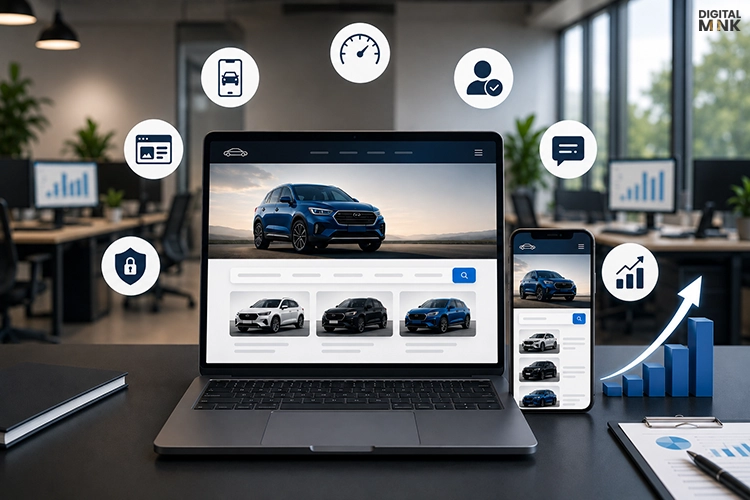
There’s an assumption that pops up in the automotive industry that if vehicle sales slow down, the first place people look is the inventory.
More trucks, different SUVs, or maybe aggressive pricing? Those questions matter, but very few people stop to question whether their automotive website design is influencing those decisions long before a customer ever visits the showroom.
After spending time reviewing dealership websites across Canada, our team detected a pattern.
Sometimes two dealerships are selling almost identical vehicles. Similar prices. Similar reviews. Sometimes they’re just a few kilometres apart.
Yet one keeps attracting online enquiries while the other wonders why the website isn’t pulling its weight.
The difference usually isn’t sitting on the lot. It’s sitting on the screen.
Buyers today make dozens of tiny decisions before they ever book a test drive. They decide whether a dealership feels credible. Whether finding information is easy. Whether it’s worth spending another five minutes on the website or heading back to Google.
Before wondering how to improve website ranking for your automobile business, it’s worth asking a simpler question: what happens after buyers arrive on your website?
A website won’t convince someone to buy a vehicle they don’t want, but it can absolutely influence whether they choose to visit your dealership instead of someone else’s.
Buyers Don’t Compare Every Dealership. They Eliminate Them.
There’s an interesting difference between how dealerships think people shop and how people actually shop.
Most buyers aren’t trying to compare every dealership in town. They’re looking for reasons to narrow the list.
Sometimes it’s missing vehicle photos. Sometimes the pricing isn’t clear. Sometimes they’re left wondering whether a vehicle is even available. None of these issues feels significant on its own, but together they create hesitation.
A buyer doesn’t usually think, “This dealership has a bad website.” They simply close the tab and keep looking.
Anyone who’s checked inventory between work and the drive home on Deerfoot knows patience runs out quickly. Buyers appreciate dealerships that answer questions before they have to ask them.
That’s where dealership website optimization makes a difference. The goal isn’t to impress visitors with clever design. It’s to make finding the right vehicle feel easy.
And that starts with the inventory itself.
A Vehicle Listing Should Answer Questions Before Buyers Think to Ask Them
A surprising number of dealership websites still treat vehicle listings like digital catalogues. A few photos, a short description, and a price. Then the buyer is expected to make the next move.
That’s not how most people shop in 2026.
Someone researching a used F-150 or a family SUV has questions long before they’re ready to book a test drive. They want to compare trims, understand financing options, see the vehicle from every angle, and get a feel for whether it’s worth driving across the city to see in person.
Every unanswered question becomes another reason to keep browsing.
A strong car dealer website doesn’t just display inventory. It helps buyers make decisions. The easier it is to answer those early questions, the more likely they are to click that enquiry button instead of returning to search results.
Once that confidence starts to build, another factor quietly comes into play: Trust.
Why Good Automotive Website Design Builds Trust Before Price Matters
There’s an old saying in sales that people buy from businesses they trust. And buying a vehicle is no different.
Two dealerships might advertise similar models at similar prices, yet one consistently attracts more enquiries. More than often, the difference isn’t the inventory. It’s the confidence buyers feel before they ever make contact.
Marketplaces like AutoTrader do a great job of helping shoppers discover vehicles. But once someone lands on your website, they’re looking for something different.
They want reassurance. Latest reviews. Clear financing information. Real photos of the dealership. Maybe even a glimpse of the team they’ll be dealing with.
Simon Sinek wrote, “People don’t buy what you do; they buy why you do it.” (Start With Why, 2009.) Although he was talking about business in general, the idea fits dealerships surprisingly well. Buyers aren’t simply evaluating a vehicle. They’re deciding whether they feel comfortable buying it from you.
Trust isn’t built by one big feature. It’s usually the result of dozens of small signals working together.
| Market Insight Buyers don’t expect a dealership website to answer every question. They do expect it to answer enough questions that taking the next step feels worthwhile. |
Your website starts building trust long before anyone walks into the showroom.
Explore Our Website Development Services
Every Extra Click Gives Buyers Another Reason to Leave
One of the easiest ways to lose a lead is by asking for too much, too soon.
We’ve seen dealership websites where booking a test drive meant navigating three different pages or filling out lengthy enquiry forms before a salesperson even knew what vehicle the buyer was interested in.
That’s a lot to ask from someone who’s still deciding whether they trust the dealership.
The strongest websites don’t pressure visitors.
They simply make the next step obvious.
Whether it’s booking a test drive, checking financing options, valuing a trade-in, or asking a quick question, buyers shouldn’t have to hunt for it.
Good websites reduce effort, but great ones make the process feel almost invisible.
Good Automotive Website Design Is Fast Before It’s Flashy
People have become surprisingly impatient online, even when they’re making a purchase as significant as a vehicle.
No, they’re not in a hurry to buy. They’re just trying to decide where to spend their time.
If a dealership website takes too long to load, pages feel sluggish, or inventory searches become frustrating, buyers rarely stick around to troubleshoot the problem. They simply move on.
That’s particularly true on mobile devices, where many people browse inventory between meetings, over lunch, or while waiting to pick someone up from hockey practice.
A fast website doesn’t guarantee more enquiries. It simply removes one more reason for buyers to leave before they’ve even looked at your inventory.
Once buyers stay on your website, the next challenge is helping them take action without making them work for it.
Fancy Websites Rarely Sell More Vehicles. Clear Ones Often Do.
Every few years, the internet sees a new website trend.
Flashy animations, catchy transition effects, full-screen videos, Interactive elements, and pages that look impressive during a presentation.
A good design is always a plus, but when it starts clashing with the inventory, it becomes a distraction instead of an advantage.
A buyer visiting your website certainly isn’t there to admire the homepage animations. They’re trying to find answers to practical questions.
Can I afford this vehicle?
Is it still available?
Can I book a test drive?
How do I get in touch?
The faster those answers appear, the more confident people feel about taking the next step. That’s why thoughtful automotive conversion optimization significantly makes a difference. It isn’t about persuading someone to buy a vehicle. It’s about removing the little moments that make them hesitate.
The best dealership websites often have one thing in common: You barely notice the website itself. You quickly find what you came for.
And when that happens consistently, the website stops acting like an online brochure and starts generating genuine enquiries.
Your Website Never Closes. It Shouldn’t Stop Selling Either.
The showroom eventually closes for the day, but your website never does.
Someone browsing for a pickup after dinner, comparing SUVs on a Sunday afternoon, or checking financing options during a coffee break isn’t thinking about your business hours. They’re simply trying to decide whether your dealership is worth visiting.
That’s why the strongest dealership websites continue working long after the lights in the showroom have been switched off.
They answer questions, showcase available inventory, and make it easy to book a test drive, all while building trust in the background. So when customers need a service or are ready for their next vehicle, your dealership is already top of mind.
Over time, those small interactions begin adding up to something every dealership wants: more qualified vehicle sales leads.
A website won’t replace a great sales team, and it shouldn’t.
Its job is much simpler than that. Help the right buyers take the first step.
| See It In Action We’ve seen firsthand how small improvements to a dealership website can change the way people interact with it. View Our Automotive Case Study |
The Road Ahead
The next customer who visits your website probably won’t remember your homepage.
They’ll remember how easy, or how frustrating, it felt to find the right vehicle, compare their options, and take the next step.
That’s where automotive website design quietly earns its value. It doesn’t sell vehicles on its own. It creates the confidence that makes someone book a test drive, request more information, or decide your dealership is worth visiting.
Sometimes the biggest difference between two dealerships isn’t what’s parked on the lot. It’s what happens before anyone decides to visit the lot.
And that’s a race that’s already underway.
| Your inventory gets buyers interested. Your website should give them a reason to visit. Contact Our Web Designing Expert Today |