
Someone lands on a Calgary dental clinic’s website, spends a few minutes reading about Invisalign, checks the financing options, maybe even looks at the booking page.
Then they leave.
No appointment. No follow-up. Nothing.
It’s easy to write that visitor off as a lost lead. But they could have been comparing clinics, checking the cost, talking it over with their partner, or simply getting pulled into the rest of their day.
At this point, email marketing for Dental clinics can do more than send reminders and promotions. Done properly, it gives interested patients useful information while they are still deciding.
The same idea applies to retargeting.
So, what can a clinic do when someone isn’t ready to book today?
Let’s explore from Digital Monk’s perspective.
Not Every Patient Is Ready to Book on the First Visit
You search “Invisalign Calgary.” Open a few clinics. Compare prices. Read about treatment time. Check whether financing is available.
Then you close the tab.
Not because you weren’t interested. You just weren’t ready to make the call yet.
The same thing happens with dental implants, children’s dentistry, or an emergency appointment. Sometimes a patient is weighing options, sometimes checking the cost, and sometimes they simply need to think about it.
That little pause is easy to mistake for lost business.
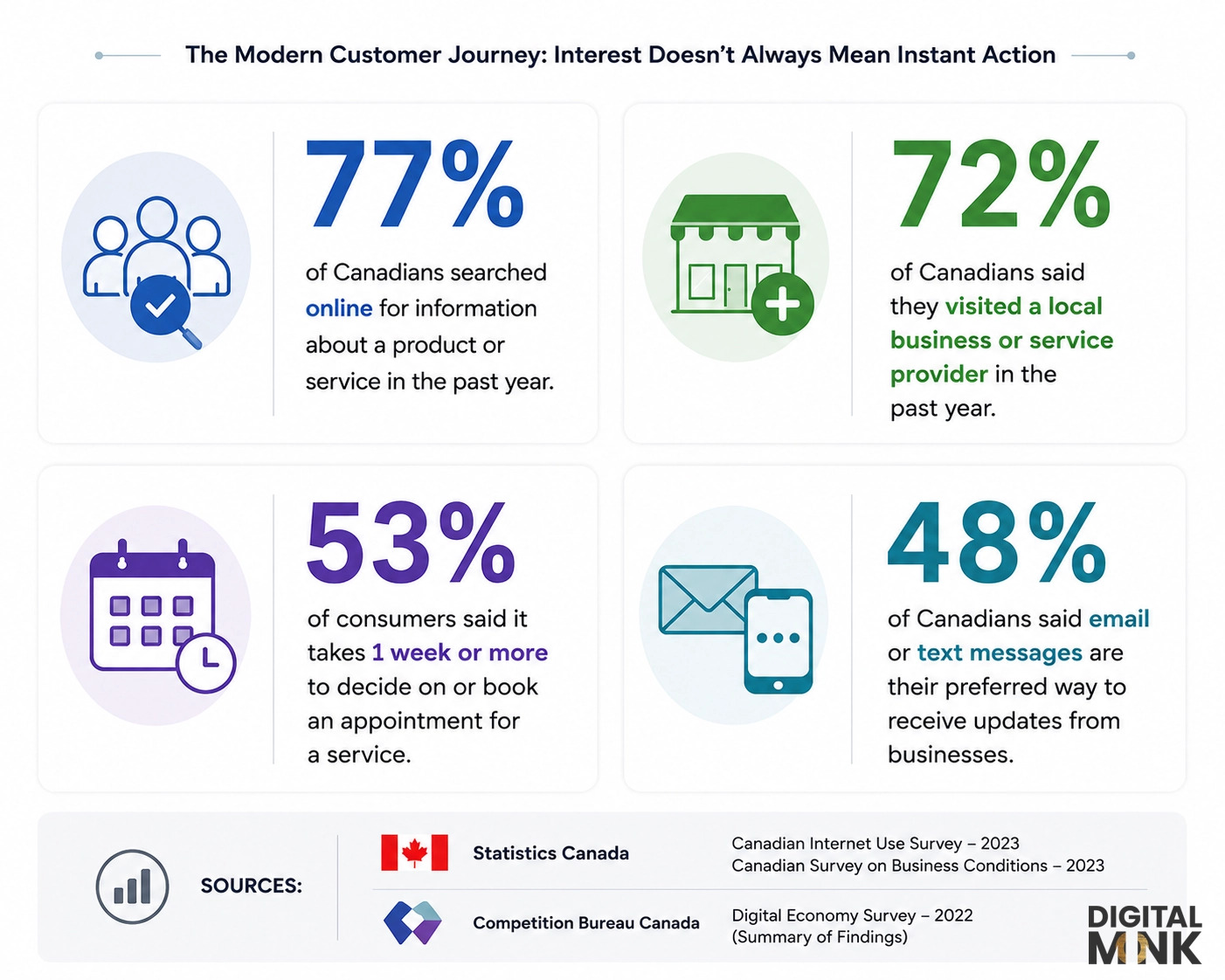
Good dental patient marketing treats it differently. The person has already raised their hand, even if they haven’t booked. A useful email, a helpful answer, or a well-timed reminder can keep the clinic in their consideration without crowding them.
Because patients don’t always need a push.
Sometimes, they just need a little more certainty.
Email Marketing for Dental Clinics Can Keep the Conversation Going
Let’s say someone in Calgary spends half an hour comparing Invisalign options, then leaves without booking.
A few days later, an email lands in their inbox.
Not “Limited-time offer. Book now.”
Instead, it answers something they were probably wondering about anyway: what happens during the first consultation, how long treatment usually takes, what financing may look like, or what questions they should ask before choosing a clinic.
With dental email marketing, the opportunity is pretty simple: keep the conversation going after someone leaves the website. A useful email can answer a question, remind them about an appointment, or give them a reason to come back.
The same could work for someone researching implants. Explain the process. Address recovery concerns. Clarify financing. Give them something useful enough to keep the clinic in mind.
| A better follow-up question “What would this person need to know before they feel comfortable booking?” |
Give them that answer, and you have a much better reason to land in their inbox.
Retargeting Should Remind, Not Chase
There’s a fine line between staying visible and becoming annoying with retargeting.
Someone visits a treatment page, leaves the website, and suddenly the clinic’s ad appears on every second scroll. Same image. Same “BOOK NOW” button. Same message.
The problem isn’t retargeting itself. It’s the lack of restraint.
For dental clinic marketing Calgary, a better campaign might rotate between useful treatment information, common questions, patient education, and a clear next step. Keep audiences relevant, watch frequency, and give the creative some breathing room.
Retargeting is like a tap on the shoulder, not a tug on the sleeve.
The best campaigns know when to appear, what to say, and when to get out of the way.
And once that principle is in place, email and retargeting can start working together instead of behaving like two completely separate campaigns.
| Want your social campaigns to do more than follow people around the internet? Explore Our Paid Social Media Marketing |
Your Email and Ads Should Know Where the Patient Left Off
A dental implant enquiry and a missed contact-form submission may look similar in a database.
But are they really?
One person has already shown interest in a specific treatment. The other may have been browsing, asking a general question, or simply left before finishing the form.
Sending both the same three-email sequence and the same retargeting ad wastes that distinction.
This is why dental patient management is extremely crucial when planning an email campaign.
Think of the journey more like:
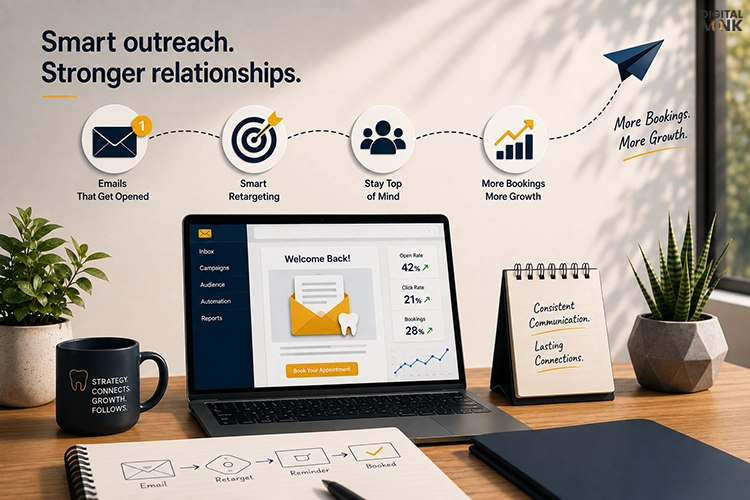
Treatment page → leaves → useful email → relevant ad → returns → books
The messaging can change depending on what happened before the person disappeared. Treatment researchers may need education. Unbooked enquiries may need reassurance. Consultation visitors may need a different nudge altogether.
You don’t need an elaborate system to start.
You just need to stop treating everyone in your database as though they arrived for the same reason.
The more context you keep, the less your follow-up feels like a campaign being sent at people.
What Should a Clinic Actually Send?
The answer largely depends on one thing: What happened before the person disappeared?
| Patient Situation | More Suitable Follow-up |
| Researching Invisalign | Treatment guide or consultation FAQ |
| Asked about implants | Procedure and recovery information |
| Didn’t book after an inquiry | Answers to common booking concerns |
| New patient | What to expect at the first visit |
| Existing patient | Relevant care reminders |
The point isn’t to turn every email into another “Book Now” button.
If someone is still weighing treatment, help them understand it.
If they’re unsure about the first appointment, remove some of that uncertainty.
And when they’re finally ready to book a dental appointment, the destination should be easy to find.
Good follow-up doesn’t need to feel like a sales sequence.
Sometimes, the most useful thing a clinic can send is simply the answer that makes someone think, “Okay, that clears things up.”
| What Happens After ‘Not Yet’? A patient submits an enquiry but doesn’t book. The easy response is to keep sending reminders. A better response might be to give them a little room, then follow up with something genuinely useful: an answer to a common concern, information about the treatment, or what they can expect at their first visit. Care Is a Strategy when the follow-up respects the person as much as it respects the conversion. Useful information. Good timing. No unnecessary pressure. |
The Goal Isn’t More Reminders. It’s Better Reasons to Return
A reminder says, “We’re still here.”
A useful follow-up says, “Here’s something that might help.”
That’s the difference worth keeping in mind when email and retargeting are working together. One can answer a treatment question. Another can explain the process. A third might clear up financing or help someone feel a little less apprehensive about making contact.
The timing matters too. Someone searching “dental appointment near me” today may not be ready to book today. They might come back after doing some homework, comparing clinics, or finally getting around to that appointment they’ve been putting off.
The aim shouldn’t be to spam their inbox or feed with reminders and offers.
It’s to give them a concrete reason to believe why your clinic is the best when they’re ready.
| Want to turn more clinic interest into appointments? Explore Our Email Marketing Services |
Wrap Up: The Patient Who Didn’t Book Today Isn’t Necessarily Gone
Not every decision happens in one sitting. Someone may need a few days to compare options, talk it over with family, or simply feel ready to take the next step.
That doesn’t call for a barrage of emails and ads.
It calls for something useful to say when they’re ready to listen.
Email marketing for Dental clinics works best when it feels helpful, not intrusive, keeping the practice familiar until a patient is ready to act.
Because when that moment comes, the clinic they remember may not be the one they visited first.
It may be the one that stayed useful.
| If you have patients slipping away before they book, we can take a look at what’s happening between interest and appointment. Contact Us |